In today’s fast-paced world, the way we manage our finances has been completely transformed. Gone are the days when securing a loan meant dressing up, gathering a mountain of paperwork, and spending hours at a local bank branch. The rise of financial technology, or fintech, has introduced a powerful new player: the online lender.
This digital revolution presents a crucial choice for anyone needing to borrow money. Should you stick with the tried-and-true traditional bank, with its familiar name and marble columns, or embrace the speed and convenience of an online loan? Both paths have distinct advantages and potential pitfalls, and the right answer depends entirely on your unique financial situation, priorities, and comfort level with technology.
Understanding the Landscape: Traditional Bank Loans
A traditional bank loan is what most people picture when they think of borrowing money. It involves working directly with an established financial institution like a major national bank, a regional bank, or a local credit union. These institutions have been the bedrock of lending for centuries, building their reputations on trust, security, and long-term customer relationships.
The process typically begins with an in-person visit or a phone call to a loan officer. You’ll discuss your needs, fill out extensive applications, and provide detailed documentation, including pay stubs, tax returns, and bank statements. The bank then undertakes a rigorous underwriting process, meticulously evaluating your credit history, income, and debt-to-income ratio before making a decision.
The Advantages of Sticking with Tradition
- Personalized Service and Relationships: The biggest draw of a traditional bank is the human element. You can sit down with a loan officer, ask questions face-to-face, and get personalized advice. If you already have a checking or savings account with the bank, this existing relationship can sometimes lead to better terms or a higher chance of approval.
- Trust and Security: Established banks are heavily regulated and have a long history of managing customer funds securely. This can provide significant peace of mind, especially when borrowing large sums of money for a mortgage or a substantial business investment.
- Diverse Product Offerings: Traditional banks are often a one-stop-shop for financial products. They can bundle loans with other services like credit cards, checking accounts, and investment services, sometimes offering relationship-based discounts.
The Drawbacks of the Old-School Approach
- Slower Application and Approval Process: The meticulous, manual nature of traditional lending means it takes time. From application to funding, the process can take several days or even weeks, which is not ideal for emergencies.
- Stricter Eligibility Requirements: Banks are typically more risk-averse. They often have rigid credit score and income requirements, making it difficult for individuals with fair or poor credit, or those with non-traditional income streams, to get approved.
- Less Flexibility and Convenience: The process is often constrained by banking hours. You’ll need to schedule appointments, and the paperwork can be cumbersome. There’s generally less flexibility in loan terms compared to more agile online competitors.
The New Contender: The Rise of Online Loans
Online lenders are digital-first financial companies that operate almost entirely over the internet. These can range from fintech startups to the online lending arms of established financial companies. They leverage technology to streamline every aspect of the borrowing process, from application to funding.
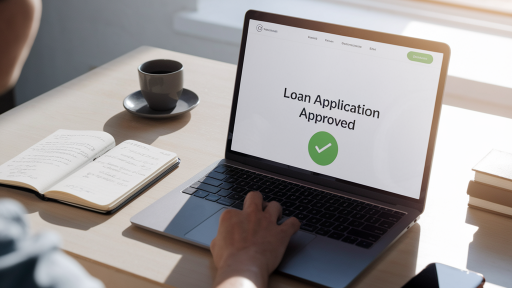
With an online lender, the entire experience happens on your computer or smartphone. You fill out a simple online form, upload documents digitally, and often receive a decision within minutes. If approved, the funds are typically deposited directly into your bank account, sometimes as quickly as the same or the next business day. This model prioritizes speed, convenience, and accessibility.
The Perks of Going Digital
- Unmatched Speed and Convenience: This is the primary advantage. You can apply for a loan from the comfort of your home, 24/7, and often receive funds in 24 to 48 hours. This is invaluable for urgent financial needs.
- More Accessible Criteria: Many online lenders use sophisticated algorithms that look beyond just your credit score. They may consider factors like education, employment history, and cash flow, making them a more viable option for borrowers with less-than-perfect credit.
- Competitive Rates and Transparency: The lower overhead costs of operating without physical branches allow many online lenders to offer competitive, and sometimes lower, interest rates. The ability to quickly see your potential rate through a pre-qualification process (often without a hard credit check) makes comparison shopping easy.
The Potential Downsides of Online Lending
- Lack of In-Person Support: If you run into an issue or have a complex question, you can’t just walk into a branch. Customer service is handled through email, chat, or phone calls, which may not be as effective for everyone.
- Risk of Predatory Lenders: The online space is vast, and while many reputable lenders exist, there are also predatory ones that charge exorbitant interest rates and fees. It’s crucial to research and verify the legitimacy of any online lender.
- Impersonal Experience: The entire process is automated and algorithm-driven. There is no room for negotiating or explaining a unique circumstance to a loan officer who might advocate for you.
Head-to-Head Comparison: Key Differentiators
To make an informed decision, it’s helpful to see how these two options stack up against each other on the factors that matter most. This table provides a clear, at-a-glance comparison.
| Feature | Traditional Bank Loan | Online Loan |
|---|---|---|
| Application Process | Often in-person, extensive paperwork, requires appointments. | Fully online, streamlined forms, digital document upload, 24/7 access. |
| Approval Speed | Slow; can take several days to weeks. | Fast; decisions often in minutes, funding within 1-2 business days. |
| Interest Rates & Fees | Can be competitive, especially for excellent credit and existing customers. | Often very competitive due to lower overhead; easy to compare offers. |
| Eligibility Requirements | Typically strict; strong emphasis on high credit scores and low DTI ratio. | More flexible; may consider alternative data points, accessible to a wider credit range. |
| Customer Service | Personalized, face-to-face support available at local branches. | Digital; support via phone, email, or online chat. No in-person option. |
| Loan Types | Wide range including mortgages, auto, business, personal, and HELOCs. | Primarily focused on unsecured personal loans, but expanding into other areas. |
Who Should Choose a Traditional Bank Loan?
Despite the rise of online options, a traditional bank is still the best choice for certain types of borrowers. You might be a good fit if:
- You Value Face-to-Face Interaction: If you prefer to discuss your finances in person and build a relationship with your lender, a bank is the way to go.
- You Have an Excellent Credit Profile: Borrowers with high credit scores and stable financial histories can often leverage this to secure the best possible interest rates from a traditional bank.
- You Have a Long-Standing Relationship with Your Bank: Your existing bank may offer loyalty discounts or more favorable terms that an outside lender can’t match.
- You Need a Large or Complex Loan: For something like a mortgage or a large-scale business loan, the expertise and robust infrastructure of a traditional bank are often indispensable.
Who is the Ideal Candidate for an Online Loan?
Online lenders have carved out a significant niche by serving customers who are underserved by or simply prefer an alternative to traditional banks. An online loan could be right for you if:
- You Need Funds Urgently: If you’re facing an emergency expense, like a medical bill or an unexpected car repair, the speed of an online loan is a game-changer.
- You Have a Fair or Average Credit Score: If your credit isn’t perfect, you’ll likely find more options and a higher chance of approval with online lenders who use more holistic approval criteria. Understanding your credit score is the first step in this process.
- You Are Tech-Savvy and Prefer Digital Convenience: If you are comfortable managing your finances online and value efficiency over in-person service, the online loan process is tailor-made for you.
- You Want to Comparison Shop Efficiently: Online lending platforms make it incredibly easy to pre-qualify with multiple lenders and compare rates and terms side-by-side without impacting your credit score. This transparency empowers you to find the best possible deal for your situation. It’s vital to understand the difference between APR and interest rate to make an accurate comparison.
Making the Final Choice
Ultimately, the “best” type of loan doesn’t exist in a vacuum. The right choice is the one that best aligns with your personal and financial circumstances. The debate isn’t about one being definitively better than the other; it’s about finding the right tool for the job.
A traditional bank loan offers a sense of security, personalized guidance, and the potential benefits of an established relationship. It’s a steady and reliable option, particularly for those with strong credit and complex borrowing needs. An online loan, on the other hand, champions speed, convenience, and accessibility, opening doors for many who might have been shut out of the traditional system. Before you commit, it’s wise to review borrower protections and rights. The Consumer Financial Protection Bureau provides extensive resources for borrowers.
Take a moment to evaluate your priorities. Is speed your top concern? Do you value a human connection? What does your credit profile look like? By answering these questions honestly, you can navigate the modern lending landscape with confidence. By carefully weighing the pros and cons presented here, you can be better prepared for making an informed decision about an online loan vs. a traditional bank loan that will support your financial goals without causing undue stress.