Navigating the world of finance can often feel like learning a new language, with terms and products that seem intentionally complex. Among these, the personal loan stands out as a versatile and common tool, yet many people are unsure about the specifics of how it actually functions from start to finish.

At its core, a personal loan is a straightforward concept: you borrow a sum of money from a lender and agree to pay it back over a set period, with interest. This guide will demystify the entire process, breaking it down into simple, easy-to-understand steps so you can feel confident and informed.
What Exactly is a Personal Loan?
A personal loan is a type of installment loan, which means you borrow a fixed amount of money and repay it in regular, equal payments (installments) over a predetermined timeframe, known as the loan term. Unlike a mortgage or an auto loan, which are secured by the property or vehicle you’re buying, most personal loans are “unsecured.” This means they don’t require you to put up any collateral, like your house or car, to guarantee the loan.
Because there’s no collateral for the lender to seize if you default, the decision to approve you is based heavily on your financial trustworthiness. Lenders assess your credit history, income, and existing debt to gauge the risk of lending to you. This risk assessment directly influences the interest rate and terms you’ll be offered.
The Core Components of a Personal Loan
Before diving into the step-by-step process, it’s crucial to understand the key terms that define any personal loan. These components determine how much the loan will truly cost you over time.
Principal
This is the initial amount of money you borrow from the lender. If you are approved for a $10,000 loan, your principal is $10,000. Your monthly payments will be calculated to cover the repayment of this principal plus any accrued interest.
Interest Rate
The interest rate is the percentage of the principal that the lender charges you for the privilege of borrowing their money. It’s the primary cost of the loan. This can be either fixed or variable, a distinction we’ll explore in more detail later.
Annual Percentage Rate (APR)
The APR is a more comprehensive measure of the loan’s cost. It includes not only the interest rate but also any additional fees associated with the loan, such as origination fees or closing costs. When comparing loan offers, the APR gives you a more accurate, “apples-to-apples” comparison of the total cost than the interest rate alone.
Loan Term
The loan term is the length of time you have to repay the loan in full. Common terms for personal loans range from two to seven years (24 to 84 months). A shorter term means higher monthly payments but less total interest paid. A longer term results in lower monthly payments, but you’ll pay significantly more in interest over the life of the loan.
A Step-by-Step Guide: How the Personal Loan Process Works
Understanding the journey from application to final repayment can remove much of the anxiety associated with borrowing. Here’s a breakdown of the typical stages involved.
Step 1: Assessing Your Needs and Financial Health
The first step is internal. Before you even look at lenders, you need to determine exactly why you need the loan and how much you truly need to borrow. Avoid the temptation to borrow more than necessary. Then, take a hard look at your finances:
- Check Your Credit Score: Your credit score is one of the most critical factors in loan approval and the interest rate you’ll receive. You can get free credit reports from major bureaus like Experian. Generally, a score above 700 is considered good and will qualify you for better rates.
- Calculate Your Debt-to-Income (DTI) Ratio: Lenders use your DTI ratio to assess your ability to manage monthly payments. To calculate it, add up all your monthly debt payments and divide them by your gross monthly income. Most lenders prefer a DTI of 43% or lower.
- Determine What You Can Afford: Use an online personal loan calculator to estimate your monthly payments based on different loan amounts, interest rates, and terms. This will help you see if the payment fits comfortably within your budget.
Step 2: Shopping Around and Prequalification
Never accept the first loan offer you see. The best way to secure favorable terms is to compare offers from multiple lenders, including traditional banks, credit unions, and online lenders. Many lenders offer a “prequalification” or “pre-approval” process. This involves a soft credit inquiry, which does not affect your credit score, and gives you a preliminary idea of the loan amount and interest rate you might qualify for.
Step 3: The Formal Application
Once you’ve chosen a lender with the best offer, you’ll proceed with the formal application. This is a more in-depth process where you’ll need to provide detailed personal and financial information. Be prepared to submit documents such as:
- Proof of identity (driver’s license, passport)
- Proof of address (utility bill, lease agreement)
- Proof of income (pay stubs, W-2s, tax returns)
- Bank statements
- Information about your employer
Submitting a formal application will trigger a hard credit inquiry, which can temporarily lower your credit score by a few points. This is why it’s wise to do all your loan shopping within a short period (usually 14-45 days) so that multiple inquiries are treated as a single event by credit scoring models.
Step 4: Underwriting and Approval
During the underwriting stage, the lender meticulously verifies all the information you provided. They will analyze your credit report, confirm your income, and ensure you meet all their lending criteria. If everything checks out, the lender will extend a final loan offer. This offer will include a loan agreement detailing the final APR, monthly payment, loan term, and all other conditions. Review this document carefully before signing.
Step 5: Receiving the Funds
After you sign the loan agreement, the lender will disburse the funds. The speed of this process varies. Online lenders are often the fastest, sometimes depositing the money directly into your bank account within one business day. Traditional banks might take a few days longer.
Step 6: The Repayment Phase
Your repayment journey begins. Your first payment is typically due about 30 days after you receive the funds. Most lenders offer autopay, which is a convenient way to ensure you never miss a payment. Each monthly payment you make is split between paying down the principal and covering the interest. At the beginning of the loan term, a larger portion of your payment goes toward interest. As time goes on, more of it goes toward reducing your principal balance.
Types of Personal Loans: Secured vs. Unsecured
Understanding the fundamental difference between secured and unsecured loans is key to choosing the right product for your situation.
| Feature | Unsecured Personal Loan | Secured Personal Loan |
|---|---|---|
| Collateral | Not required. Based on creditworthiness. | Requires an asset (e.g., car, savings account) as collateral. |
| Risk for Lender | Higher, as there’s no asset to seize upon default. | Lower, as the lender can claim the collateral if you fail to pay. |
| Interest Rates | Typically higher to compensate for the increased risk. | Often lower due to the reduced risk for the lender. |
| Accessibility | More difficult to qualify for, especially with poor credit. | Can be an option for borrowers with lower credit scores. |
| Example | A loan for debt consolidation or a vacation. | A loan secured by the title of your car. |
Understanding Fixed vs. Variable Interest Rates
Another crucial choice is the type of interest rate. A fixed-rate loan has an interest rate that remains the same for the entire loan term. This means your monthly payment will never change, making it easy to budget for. A variable-rate loan has an interest rate that can fluctuate over time based on a benchmark index. While it might start lower than a fixed rate, it could increase, raising your monthly payment.
For most borrowers, a fixed-rate loan is the safer and more predictable option, especially for long-term financial planning.
Common Uses for a Personal Loan
One of the biggest advantages of personal loans is their flexibility. You can use the funds for almost any legitimate purpose. Some common uses include:
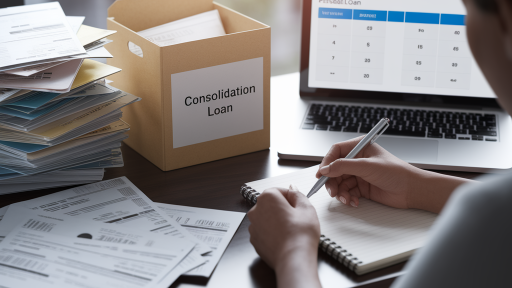
- Debt Consolidation: Combining multiple high-interest debts (like credit cards) into a single loan with a lower interest rate.
- Home Improvements: Financing renovations or repairs without tapping into home equity.
- Major Purchases: Covering the cost of an appliance, electronics, or furniture.
- Medical Expenses: Paying for medical or dental procedures not fully covered by insurance.
- Emergency Costs: Handling unexpected expenses like a major car repair or a sudden job loss.
What Happens If You Can’t Repay Your Loan?
If you find yourself struggling to make payments, the worst thing you can do is ignore the problem. Defaulting on a loan has serious consequences, including significant damage to your credit score, collection agency calls, and potential legal action. Instead, be proactive. Contact your lender immediately to explain your situation. Many lenders are willing to work with borrowers by offering options like a temporary forbearance, a modified payment plan, or a lower interest rate.
Final Thoughts: Is a Personal Loan Right for You?
A personal loan can be a powerful financial tool when used responsibly. It offers predictable payments and can be a cheaper alternative to high-interest credit cards. However, it is still a debt that must be repaid. Before you apply, ensure you have a clear purpose for the funds and a solid plan for repayment that fits within your budget.
By understanding the components, following the steps, and carefully evaluating your financial situation, you can navigate the borrowing process with confidence. For a more detailed breakdown from a government source, the Consumer Financial Protection Bureau provides excellent resources on understanding how a personal loan works and what to look out for.